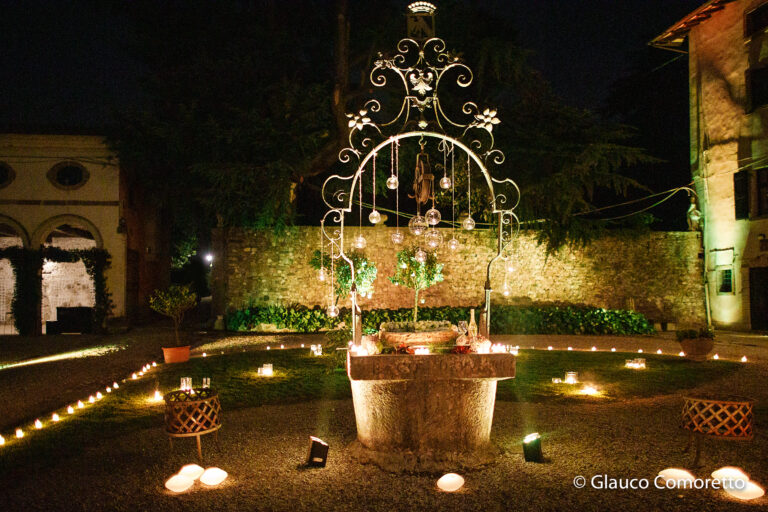

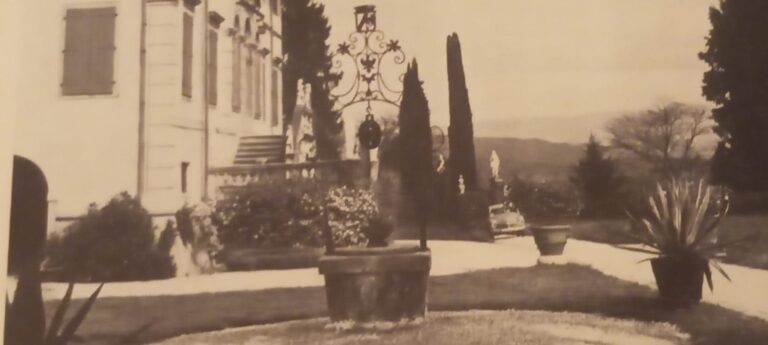
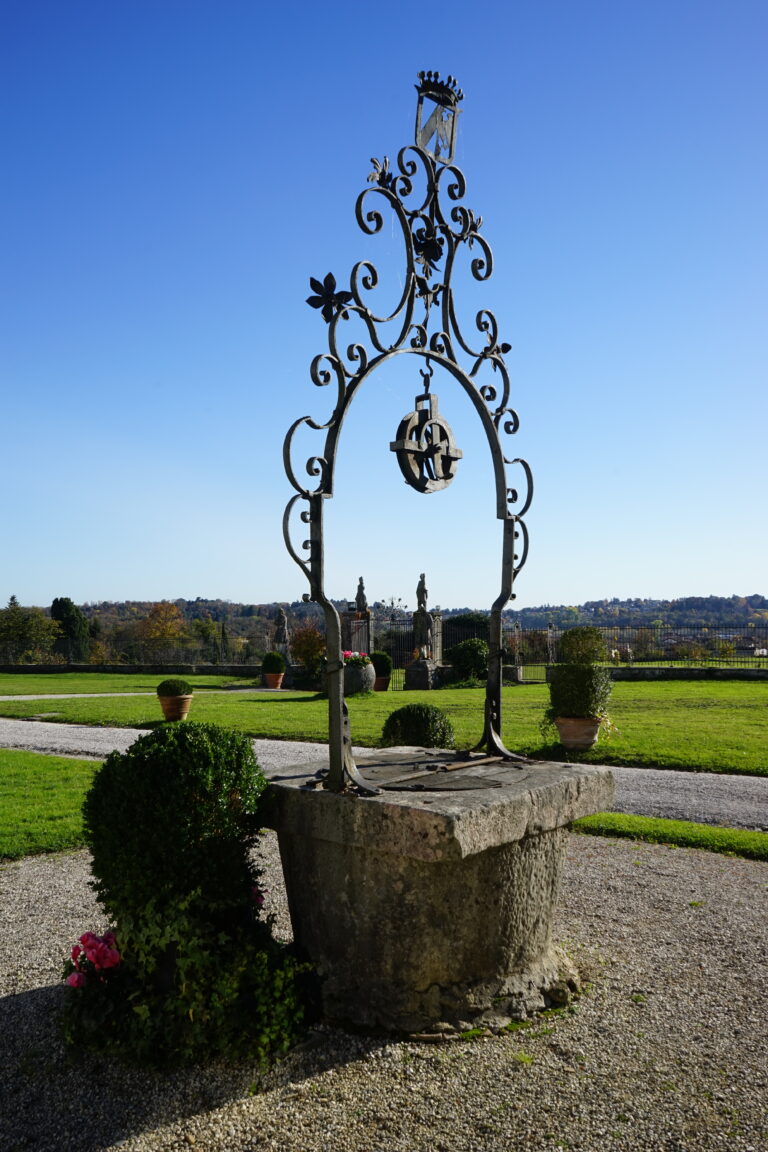

Surely it has been embellished over time: firstly with an important monolithic stone ring, in which mysterious words are engraved and have been erased by time. These could have indicated the date or who commissioned it. Secondly with the elegant crest above, in wrought iron, decorated with flowered friezes and softened by the crowned family crest. And finally, with the grate and the sheet metal lid, handcrafted in recent times by the old town blacksmith, to replace the concrete block that covered its opening.
Beyond the decorative aspects, however, its essential purpose certainly remains: to supply water, one of the most precious goods for life, to nourish animated beings, men, animals, plants … Or perhaps, in the eventuality, to be able to put out fires, who knows. It is also interesting to think about how this water got up here, almost to the top of the hill. Surely it descends from the nearby mountains and through mysterious passages made by nature, maybe caused by glaciations and other geological phenomena. In all seasons it reaches a depth not too far from the surface and it can easily be collected, even without mechanical tools (like the electric pump we use now). In the past people could rely on the simple help of a bucket tied to a rope that ran in the ancient pulley, hanging from the elegant wrought iron support.
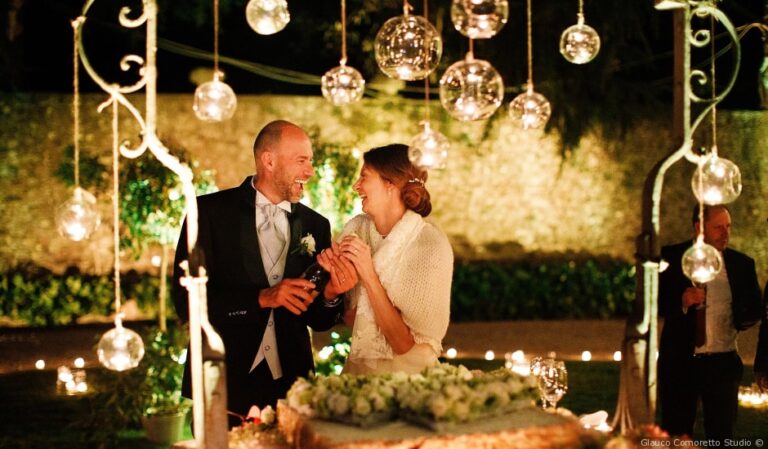
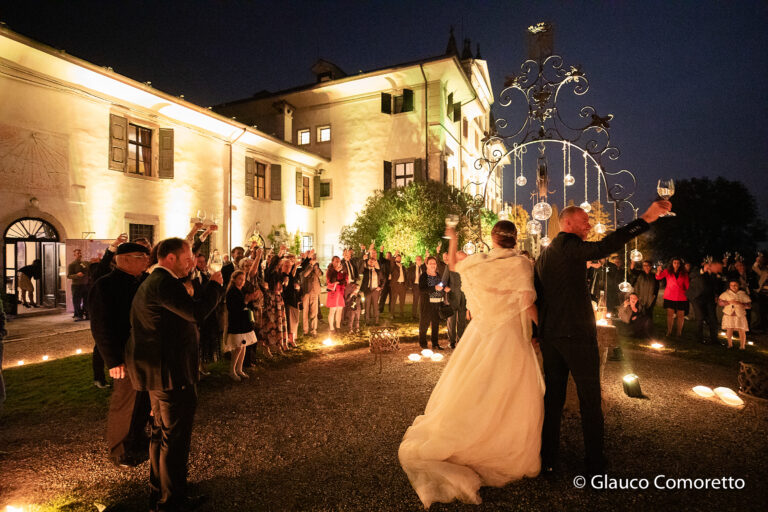
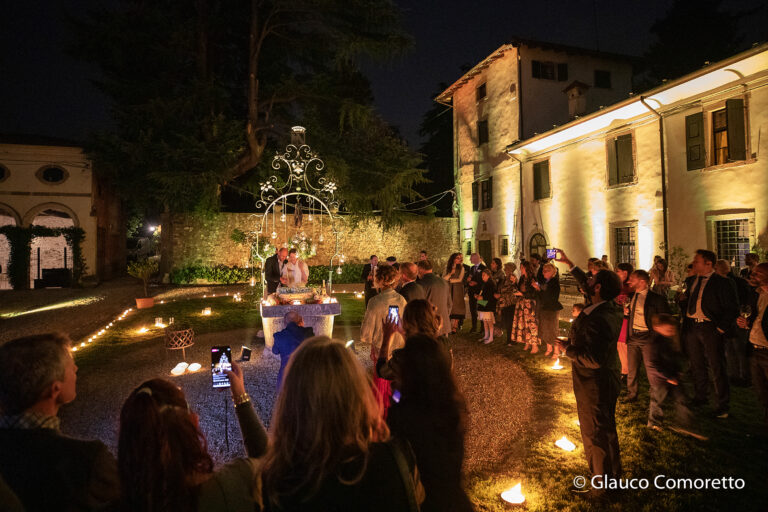
How many interesting elements to observe, to study, to admire… How many mysteries to discover or imagine: its builder, its users, the creators and creators of the elements that have been gradually added over the centuries… After a long time of disuse, following the introduction of the aqueduct, this well has now a new purpose. In addition to providing water for the lawn and plants during the – fortunately quite short – period of summer drought, it serves as a base and a gathering point for the cutting of the cake. So many newlyweds with their guests get together around this ancient well, decorated and lit up for their special event! And I like to think that he too, an ancient inanimate object, but with a continuous flow of energy, can in some way join in with the happy bystanders on the feast day.
May the future preserve its destiny, may time not change its function, may the climate not dry up its vein, may civilisation not pollute its aquifer… And that the spouses continue to gather happily around him, during festive ceremonies, after enjoying excellent lunches and before starting the evening dances. And may all this bring health and serenity, from generation to generation.
Sicuramente è stato nel tempo abbellito: prima con una importante vera di pietra monolitica in cui sono incise delle parole misteriose, perchè in parte cancellate dal tempo, che potrebbero indicarne l’origine, la data, il committente… Poi con l’elegante cimiero sovrastante, di ferro battuto, decorato da fregi fioriti e ingentilito dallo stemma coronato di famiglia. Infine la grata e il coperchio di lamiera, fatto artigianalmente in epoca recente dal vecchio fabbro del paese, per sostituire il blocco di cemento che ricopriva la sua apertura.
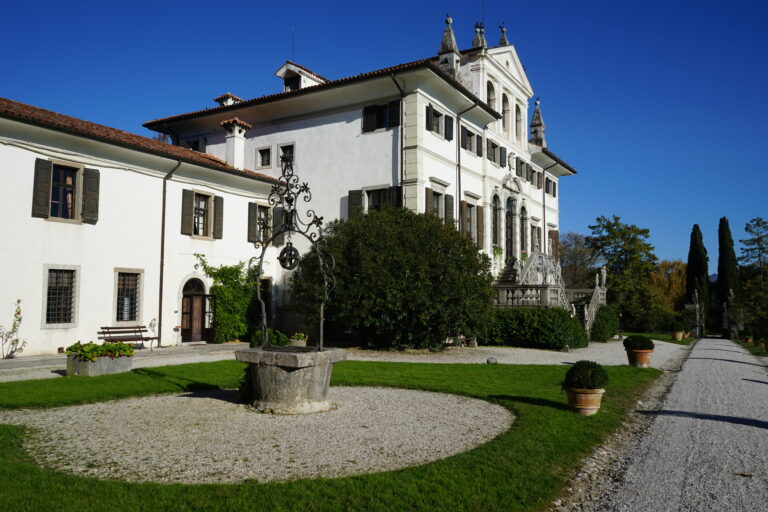
Al di lá degli aspetti decorativi, resta però di sicuro il suo scopo essenziale: fornire acqua, uno dei beni i più preziosi per la vita, per nutrire esseri animati, uomini, animali, piante… O forse, nella eventualitá, per poter spegnere fuochi, chissà …
È anche interessante pensare a come questa acqua sia arrivata, quassù, quasi in cima alla collina. Sicuramente discende dalle vicine montagne e, attraverso misteriosi passaggi, fatti dalla natura in tempi immemori, causati da glaciazioni e altri fenomeni geologici, raggiunge in tutte le stagioni una profondità non troppo distante dalla superfice da poterla recuperare facilmente. Anche senza strumenti meccanici (la pompa elettrica che usiamo ora) ma come un tempo passato, con il semplice aiuto di un secchio, legato ad una fune che scorreva nella antica carrucola appesa all’elegante sostegno di ferro battuto.. Quanti elementi interessanti da osservare, da studiare, da ammirare. Quanti misteri da scoprire o immaginare: il suo costruttore, i suoi fruitori, gli ideatori e gli artefici dei manufatti che, nei secoli, sono stati man mano aggiunti.
Dopo tanto tempo che non veniva più usato, a seguito dell’introduzione dell’acquedotto, c’è un uso insolito che ne facciamo. Oltre a procurare l’acqua per innaffiare prato e piante durante il – fortunatamente abbastanza breve, da noi – periodo di siccitá estiva, specie con la bella stagione e durante lo svolgimento delle feste, serve da base e punto di raccolta per la cerimonia del taglio della torta nuziale. Quanti sposi con i loro ospiti si sono riuniti attorno all’antico pozzo, decorato ed illuminato a festa per l’evento! E mi piace pensare che anche lui, antico oggetto inanimato ma dove scorre un flusso continuo di energia, si possa rallegrare, insieme agli astanti felici, nel giorno di festa.
Che il futuro conservi questo destino, che il tempo non modifichi la sua funzione, che il clima non inaridisca la sua vena, che la civiltà non inquini la sua falda… E che gli sposi continuino a radunarsi allegramente attorno a lui, durante festose cerimonie, dopo aver gustato ottimi pranzi e prima di lanciarsi nelle danze. E che tutto questo porti salute e serenità , di generazione in generazione…